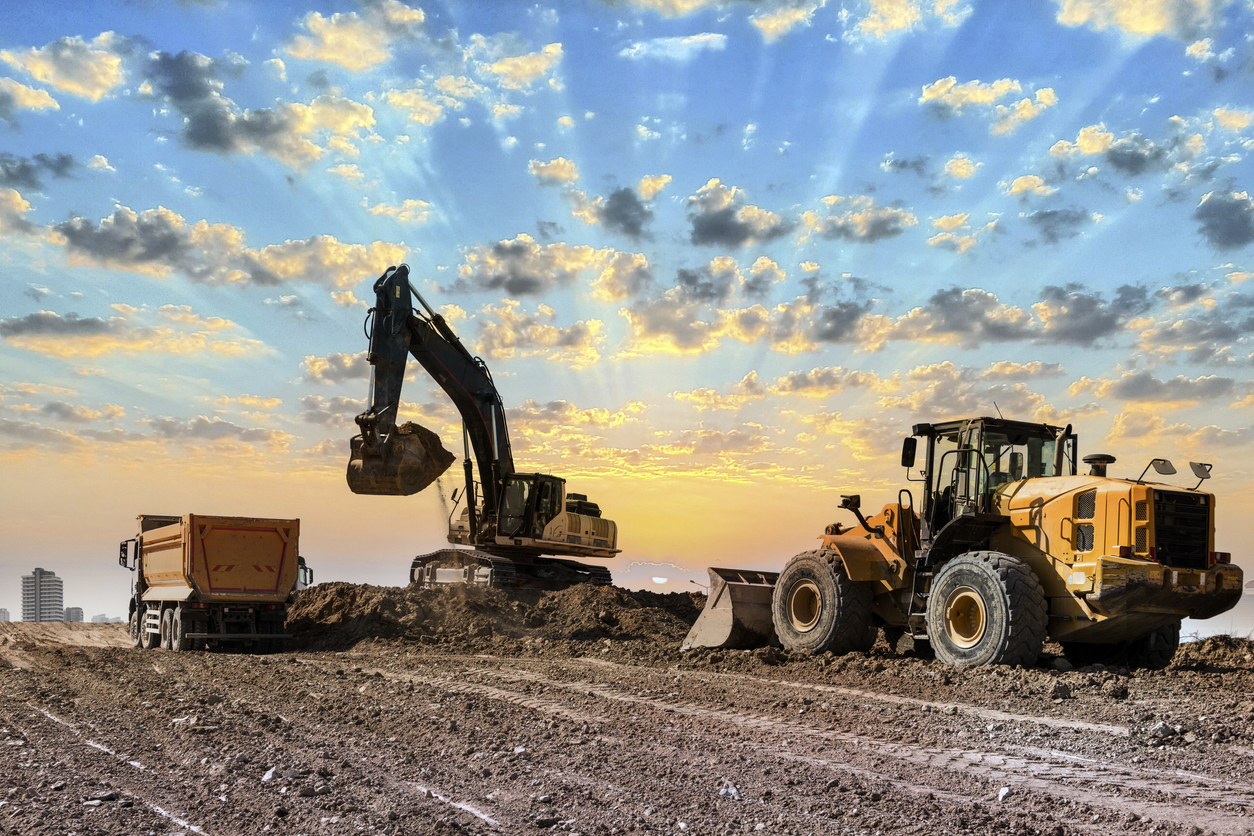
For businesses that function using heavy equipment, investing in these machinery is essential for the growth of the company. However, the cost of purchasing this heavy equipment is usually a challenge for many business owners. Many business owners struggle with providing enough capital to finance heavy machinery essential to their business operations. In these cases, getting a business loan for heavy equipment is the best option to explore.  But how exactly do these loans work? Below, we have provided everything you need about business loans for heavy equipment and how to get them. What Is A Heavy Equipment Loan? Running a business can be hard. Running one that requires heavy equipment for operation is even more difficult. Heavy equipment or heavy machinery is self-propelled, self-powered, or pull-type equipment and machinery used to handle large-scale or heavy-duty tasks. It is an umbrella term that refers to a specific category of fixed assets, including construction, forestry, mining, and industrial machines. Heavy equipment is commonly earth-moving machines such as excavators and bulldozers. However, today, the term refers to equipment used for drilling, lifting, grading, suctioning, paving, and compacting activities. Some examples of heavy machinery include skid steer loaders, backhoe loaders, wheel tractor-scrapers, and cranes. As anyone can envision, heavy machinery is large, powerful, and requires a lot of mechanics to run. As a result, they are usually more expensive to obtain or replace than smaller machinery. To avoid creating a dent in the business budget, many business owners look to heavy equipment loans as a solution to obtain heavy equipment. Heavy equipment loans are equipment financing options that allow businesses to borrow money to purchase heavy equipment. With this option, business owners do not need to pay upfront for heavy equipment.  By taking out a heavy equipment loan, businesses can quickly and easily purchase new heavy equipment or replace old ones when necessary. Since these businesses rely on these machines for operation, getting this financing option is a great way to remain in operation while efficiently managing business finances. The process for taking out a heavy equipment loan is similar to many loan options in the business world. However, being knowledgeable about the process is essential to getting the most benefits out of this financing option. With a heavy equipment loan, a business owner gets a loan provider to finance the equipment. The loan provider is usually financial institutions such as banks. In this type of loan option, the lender provides the purchase amount with an additional interest rate that the business is required to pay over a stipulated period. The process does not require collateral as many financing options do. This is because the equipment serves as collateral in the funding agreements. By doing this, the business can pay for the equipment without having to shoulder the entire cost in one go. This makes it easier for new business owners to start operations or replace old equipment that may be hindering the success of the business’s operation. Businesses like construction companies, aviation businesses, and agricultural establishments use heavy equipment financing. How Does A Heavy Equipment Loan Work? Heavy equipment loans provide capital to purchase equipment that would otherwise leave a dent in a business’s finances. It is a wise financial decision that ensures businesses do not jeopardize their cash flow to purchase the necessary heavy assets. Heavy equipment loans work for any heavy equipment. However, the amount of money the lender gives often depends on the kind of equipment the entrepreneur wants to purchase. It also depends on other factors, like whether the equipment is new or used and the entrepreneur’s eligibility. In most cases, a heavy equipment loan works like a regular loan process. However, the difference, in this case, is the lack of the need to turn in collateral. This is because the purchased equipment will be used as collateral. If the borrower defaults on payment, the equipment will be taken away. As previously mentioned, the terms of a heavy equipment loan vary with the lender. However, other factors such as equipment’s characteristics and expected useful lifespan determine the term extension.  Most heavy equipment loans have an interest rate between 8% and 30%. The lender will determine the length or duration of the repayment. However, some repayment durations are more flexible than others, which makes it important to research lenders before taking out a loan. It is also important to note that not all lenders offer 100% of the amount needed to purchase the equipment. The amount lenders are willing to pay usually varies from 80% to 100% of the equipment purchase price. This amount is usually given without needing a deposit (unless the lender’s terms say otherwise). Once the loan is fully repaid, the entrepreneur gets to keep the heavy equipment. Once again, this duration varies with the lender. However, many lenders insist on a monthly repayment plan until the pain and all interest are paid. Some lenders may require a personal or business lien to approve the loan. This is usually a form of security. If the entrepreneur defaults on the loan, the lender can take back any personal or business property used as security. To fully understand all terms, it is important to review the loan agreement. It might also help to get professional help while reviewing the terms to ensure you do not miss any important information that might be detrimental to your business in the future. How Do You Get Heavy Equipment Loans? There are various options for securing business loans for heavy equipment. These options vary with the lender. Some financial solutions to get heavy equipment include: 1. Small Business Administration (SBA) Many business owners favor SBA loans due to their high approval. SBA loans are loans guaranteed by the SBA. These loan options can be used by small, medium, or large businesses. The first thing to note when trying to get an SBA loan is that SBA loans are not paid from the SBA’s wallet. The U.S. Small Business Administration focuses on

The first step in asset planning is, of course, to create the plan. An asset management plan will serve as a road map for you and your company to carry out your asset management strategy. Not sure how to get started? In this article, we will lay out five essential steps to building an asset management plan for your organization.  What is an Asset Management Plan (AMP)? But first, what exactly is an asset management plan (AMP)? An AMP is an organizational plan that defines the actions that will be taken to develop, operate, maintain, upgrade, and dispose of company assets. It will also define what resources will be applied to carry out these objectives. All of this will be done most cost-effectively through the analysis of all the costs, risks, and performance attributes associated with the assets. An AMP can be created for an individual asset, a portfolio of assets, a group of assets, or a class of assets. It should keep in mind all timelines of each asset to extract as much value from each. In simple terms, with an AMP, you will summarize the goals of each asset’s life cycle, then break down weekly, monthly, and yearly tasks to help achieve those goals. So why should you create an AMP? Well, not only does it act as a guide for important decision-making processes, but you will also find there are many benefits to your business.  Benefits of Asset Management Here are some of the most common benefits companies will experience when undergoing asset management processes:  Reduction of customer complaints Increases customer value Improves efficiency Helps create a budget for the future Ensures compliance with regulations and industry standards Assets are well-maintained Reduces loss Prevents theft Sounds good? Great! But what if you don’t have the organizational skills to come up with an AMP? You can consult an asset management firm to help you. These experts can provide you with more information to help organize and manage your assets.  But if you are ready to dive in yourself, check out the following 5 steps to building an asset management plan for your business.  1. Come Up With A Strategy If your organization does not already have one in place, you will first want to come up with an asset management strategy. To do so, you will need to: Assess stakeholder needs: Identify and prioritize the people who will be affected by your AMP. Then do a stakeholder analysis to assess how stakeholder interests should be addressed in your plan.    Do a SWOT analysis/risk assessment: Analyze SWOT (strengths, weaknesses, opportunities, and threats) in your organization. This will help you identify and analyze the factors that can shape current and future operations.  After these assessments, you can go about creating the following: Policy and Objectives: These should outline how your company will value, support, use, and implement asset management activities. Make sure the owner/most senior staff member signs off on this document!   Strategic Asset Management Plan (SAMP): This organizational strategy document will highlight the objectives you want to achieve in your asset management strategy. Outline the tactics your organization will take to convert organizational objectives into asset management objectives. In the SAMP, focus on identifying your assets, defining stakeholders’ needs, and connecting these things to other plans or standards.  2. Analyze and Record Current Assets As you are completing your SAMP, you will also want to do a complete asset inventory of your current assets. This will bring an awareness of what exactly you’ll be managing. Your asset inventory should include the following information: Asset description Asset location Current asset value Purchase date Estimated useful life Complete an asset register recording all your current assets. The asset register should outline how and what asset data should be collected throughout its lifecycle. It is most helpful to input the register into an Enterprise Asset Management (EAM) system, or a Computerized Maintenance Management System (CMMS). Having asset management software to keep track of your assets will save lots of time, keep you organized, and prevent errors from occurring. As you record your assets, make sure to assess the condition of each item and how critical they are in implementing the company’s needs. Having a grasp on the current state of your assets will allow you to schedule maintenance as needed. It can also help you specify how much you want to invest in each asset for the needs of your organization. For instance, ask yourself how long you will allow the depreciation of your equipment until you renew or replace it. If possible, circle back on an annual basis to best optimize each critical asset’s maintenance plan. This will help ensure the asset is getting the exact care and maintenance it needs to reach organizational objectives. And you’ll save some money in the long run.  It is also helpful to be aware of how important each asset is. What would happen if it failed to perform its function? If it would upset the workflow of the whole business, you will need to prioritize it above other less important assets.  3. Calculate Asset Costs To figure out an asset’s value, not only will you need the asset’s purchase price, but you will also need to assess other asset life-cycle costs. This is a part of lifecycle management. Getting as accurate as possible with your asset costs will directly relate to an effective and efficient AMP.  To calculate total asset costs, you will need to know things like: Maintenance costs If the asset is a capital asset or an expense Condition and performance modeling Disposal costs From there, you can determine the cost, quality, quantity, efficiency, reliability, function, capacity, and safety of the services you will provide your assets. It is important that your AMP is able to match the level of service that assets provide to the customers’ expectations. You will need to find the balance between the cost to deliver the asset and the level required. Think about the following:  How do the business’s goals

Having a large number of fixed assets can be a lot of work to manage. And recording small accounting transactions may seem like more trouble than they’re worth! However, implementing a capitalization threshold helps you effectively track the fixed assets that will be used in the long run and expense the smaller, more inconsequential purchases. This can make asset management much more organized and efficient.  In this article, we will explain the ins and out of capitalization thresholds for your business assets.  What is Capitalization? Depending on who you ask, capitalization is either the provision of capital for a company or the conversion of assets into capital. That is because there are two uses of the word capitalization: In accounting, capitalizations are seen as cash expenditures recognized as an asset on the balance sheet instead of expenses listed on the income statement. The cost of the asset is expensed over its useful life instead of solely expensed in the reporting period it was purchased.    In finance, capitalization refers to the total or book value of a company’s debt and equity. The term market capitalization refers to how much the company’s outstanding shares are worth. To calculate the market cap, simply multiply the current market price by the total number of outstanding shares.  In this article, we are going to stick with the accountants’ use of capitalization. Accounting’s matching principle states that companies must record expenses in the same accounting period as the revenues they are related to. The purpose is to maintain consistency across the company’s income statements and balance sheets.  Capitalization is applied to fixed, tangible assets. This means they are to be recorded on the general ledger with their historical cost. For this reason, they are capitalized and not expensed. Fixed assets, or capital assets, include tangible things such as: Computers Vehicles Buildings Machinery Equipment Tools Office furniture To qualify for capitalization of a fixed asset, the IRS states that the item must have a useful life of at least one year. It has to be productive in the operations of the business. If investments like vacant land are not used for business operations, they will not qualify.  Assets that don’t meet the IRS qualifications will be considered an expense and recorded to the income statement instead. These include business resources that will expire or be consumed by the business within one year or one accounting cycle (depending on which is longer).  Fixed assets are not capitalized all at once when they are purchased. Instead, the process can be drawn out throughout their useful lives in which they help generate revenue for the company. The asset will be recorded on the balance sheet, where it will increase the worth of the company. How long they are capitalized upon will depend on what asset categories of property, plant, or equipment are involved. As the asset ages, its value to the company is reduced. While the business asset is losing value, its loss of value must be recorded as depreciation. This is not to be confused with the process taken for intangible assets, which is known as amortization. Deciding whether or not to capitalize on an asset will affect the recorded profits and losses of your business. Inevitably, this will affect things like its net worth, tax liability, and ability to qualify for a loan.  That is why it is essential to set a capitalization threshold for your fixed assets.  What is a Capitalization Threshold? With the multitude of expenditures that come with running a business, there are balance sheet entries. This means working to maintain and manage the asset. However, for small expenditures, this may be a waste of time and money put into the process.  For example, small office supply purchases may be used and disposed of in the same period they are purchased. The time it takes to record and track these small purchases may not even be worth it. For this reason, capitalization thresholds or capitalization limits can be established within the business. A capitalization threshold is a minimum cost at which the fixed asset should be recorded in your accounting system. So if the asset is valued: Above the threshold: The organization will capitalize purchased or constructed assets on the balance sheet   Below the threshold: The organization will charge purchases to expenses on the income statement Capitalization thresholds are most often used by companies that make use of taxpayer funding. This could include organizations like public schools, local government offices, public libraries, etc. To ensure good faith, stewardship, and transparency, these organizations must track and disclose what is being spent with taxpayers’ money.  Since these are all government-run organizations, this means their capitalization policies must be determined elsewhere.  Who Determines Capitalization Thresholds? Thresholds are determined in a variety of ways, including through regulatory bodies and policies. Some of them are: GASB 34: In June 1999, the Government Accounting Standards Board (GASB) issued GASB Statement #34 Basic Financial Statements and Management Discussion and Analysis for State and Local Governments. This Statement resulted in sweeping changes in governmental entities’ financial reporting.    OMB A-133: In 1990, OMB Circular A-133 was issued. It expanded the 1984 Single Audit Act which stated a single audit can be completed for all recipients to be used by all Federal agencies. The OMB A-133 covered nonprofit organizations as well as Institutes of Higher Education (IHEs) that received over a dollar threshold.    The organizations themselves: Organizations can come up with their capitalization thresholds. This could be based on things like audit requirements, or the goals of their accounting system. Small businesses should consult an auditor before establishing their capitalization policy.  Not only are there regulatory bodies that can set capitalization limits, but there are also a set of accounting standards that can be utilized when capitalizing assets. Generally Accepted Accounting Principles (GAAP) will allow organizations to include several other acquisition costs related to the purchase to represent the total cost of the fixed asset. Along with the purchase price, these include things like: 

You’ve purchased a tow truck or logging equipment with Coastal Kapital. How much is it worth now? Do you have a good idea of what fixed assets your business owns and their current value? And since fixed assets depreciate over time, it can be difficult to remember to replace or repair them.  Keeping track of these things might seem like a lot of work. That’s where fixed asset reporting comes in. Running regular fixed asset accounting reports helps business owners stay aware of what fixed assets they own and their value, and to keep track of any routine maintenance.  In this article, we will discover five accounting reports that can help every business owner be in the know. What are Fixed Assets? Fixed assets are tangible assets (physical property that can be touched) that are purchased for long-term use in business operations. Long-term use would be considered anything used by the business to generate income for at least one fiscal year. These assets may also be consumed or converted into cash. Common fixed assets used by businesses include: Machinery Equipment Factories Buildings Facilities Inventory Tools Office supplies Office furniture and equipment (printers, chairs, etc.) Computer hardware and other technologies Vehicles (company cars, tow trucks, semi-trucks, forklifts, etc.) Since fixed assets are made of physical material, this means they can deteriorate and experience wear and tear. To account for asset depreciation, companies must apply the allocation of asset costs to the balance sheet over the asset’s useful life. The useful life of an asset refers to an estimate of the number of years an asset is considered usable to a business before its value is fully depreciated. Once the asset comes to the end of its useful life, it can be salvaged or disposed of.  Fixed assets, also known as capital assets, are commonly represented as property, plant, and equipment (PP&E) on the balance sheet.  Fixed Asset Management Small businesses want to get as much use as they can out of their fixed assets. To achieve this goal, you will want to set up a fixed assets management system to monitor and manage your assets. While business goals may vary, there are common objectives most businesses share. Let’s take a closer look at the objectives of an asset management system:  Prevent waste: To help minimize losses, businesses need to be aware of the condition of their assets. Knowing the value of the asset in its current state will help prevent waste. For example, knowing a case of milk will expire in a week will allow you time to sell it before expiration.    Improve utility: When you are aware of the state or condition of your assets, it will allow you to make decisions on where and when the assets can be used and allocated. This can extend the lifespan of the asset, and can also help improve your business processes. For example, knowing when your company vehicle is due for an oil change and regularly going for preventative maintenance will help extend the useful life of the asset.    Maximize return on investment (ROI): When you prevent waste and improve an asset’s utility, you will automatically see more return on your investment for these assets. You will save money on repurchasing assets through prevented waste. And you will save on repairs when you improve the utility of what you currently have.  Along with these common objectives, your business may also have other political, social, technological, or environmental objectives. Managing your fixed assets efficiently and effectively can help achieve some of these objectives.  Asset Management Software Asset management objectives can be achieved through the use of tools, techniques, and software. With a personalized system set up for your business, you can track the overall performance and condition of your fixed assets. This ensures your business is capitalizing on their full value throughout their useful lives.Businesses that don’t use asset management tools often manually report on spreadsheets as a replacement. Unfortunately, these kinds of systems will lead to many more errors than a dedicated asset management system. Small businesses often use a computerized maintenance management system (CMMS) like Limble to manage their fixed assets. This type of software enables the business to easily schedule, manage, and report asset maintenance. With CMMS, it can optimize maintenance workflows, keep track of resources and routing, manage operations and repairs, as well as provide custom reports and audits.Larger businesses will likely go for an enterprise resource planning (ERP) system like Sage Intacct to help manage their fixed assets. Unlike CMMS, ERPs deal with more than maintenance. ERPs are capable of managing the complexities that come with larger businesses. They provide centralized databases that allow the automation and optimization of routine business processes. This is the set-it-and-forget-it kind of software that will allow you to automatically generate accounting reports.  Fixed Asset Reports To best achieve the asset management objectives listed earlier, it is helpful to create fixed asset reports. Creating and analyzing these reports gives you or your asset manager key information that will help your business carry out important decisions regarding asset management.  Asset reports should have a detailed overview of each individual asset so you can monitor, track, and manage them efficiently. Asset management software systems allow you to plan and optimize the asset’s lifespan, ending with the asset’s disposal. As you collect data from the asset’s life cycle, the software can help you put together essential reports for your business. If you don’t run regular reports, your business may:  Lose track of expenses and costs, leading to overspending or miscalculations Not be prepared for accounting audits Unreliable inventory management, resulting in wastage or lack of inventory for business Suffer from inefficient workflow Suffer from less productivity With the software you choose for your business, you will be able to gather asset data, create fixed asset registers, track assets, and create standard reports for careful analysis of your business. There will be several reports you’ll want to run regularly to ensure you prevent waste, improve asset utility, and

Anyone who has bought a vehicle is already familiar with depreciation. It is an inevitable fact that cars lose 20% of their value in the first year of ownership. After that, they retain only 40% of their original value after five years! Depreciation also applies to other tangible assets that are purchased for your business.  In this article, we will further discuss asset depreciation, how it works, and how business owners can best absorb these losses of value within their businesses.  What is Depreciation of an Asset? Asset depreciation refers to the use of an accounting method to allocate the cost of a tangible business asset over its useful life instead of in the period of time it was purchased. This allows the business to earn revenue from the asset immediately since the expense is spread out over time.  Depreciation is not to be confused with amortization, which is the accounting method used to decrease the cost of the asset over time. Depreciation instead represents the loss in value of the asset over time. The Internal Revenue Service (IRS) stipulates that only certain assets can be depreciated in your accounting practices. These assets must be owned by you, must have business use or produce income for your business, and have a useful life of more than one year. Types of assets that businesses can depreciate are:  Buildings Computers and other electronics Equipment Machinery Office equipment or office furniture Work vehicles Some intangible assets like patents, computer software, or copyrights Things that do not wear out or become obsolete would not be included in this list. So, businesses can’t depreciate things like:  Land Collectibles  Investments like stocks, bonds, or crypto Personal property Assets used less than one tax year Accounting Principles For Depreciation There are two main principles when it comes to the role of depreciating these assets in a business:  1. Assets decrease in value over time. If you think about it, tangible assets like computers, hair salon chairs, and real estate all break down over time. The value of an asset decreases over its lifespan. Eventually, they become unusable and can be either salvaged or disposed of. 2. You must allocate the cost of the asset purchase over the useful life of the asset. The useful life refers to the amount of time the asset can be used by the business. Businesses can use depreciation for both tax and accounting purposes. However, to do so, you must know the difference between depreciation expense and the accumulated depreciation of the asset. When an asset is purchased, the transaction is recorded as a debit to assets on the balance sheet. In exchange, there is a credit from the cash account or an increase in accounts payable (both of which are on the balance sheet). When that accounting period is over, the accountant will apply depreciation to all capitalized assets, which are all the assets that have not been “expensed” yet. This is done every accounting period so the asset’s cost can be moved from the balance sheets to income statements. These journal entries will result:  A debit to depreciation expense: This is recorded in the income statement as an expense or debit, reducing net income. Depreciation expense will be a tax depreciation deduction for the asset’s cost, which will reduce income tax. Business expenses of these types are recorded as debits on your taxes rather than credits. To claim depreciation expense on your tax return, you will need to file Form 4562 along with your taxes.   A credit to accumulated depreciation: This is recorded in a contra-asset account, reducing the value of fixed assets. Accumulated depreciation is the amount that is subtracted from the asset’s value. This will be a credit rather than a debit because the asset is losing value.  The IRS stipulates that businesses must spread these costs out over time.  Depreciation Schedule To keep track of how much long-term assets depreciate over time, businesses use a depreciation schedule. Typically this is presented in a chart or table form to review and compare. Each asset should have its own schedule. However, you can combine the data into another depreciable asset schedule that gives an overview of all your assets at once.  This data can be collected in a spreadsheet of your own or through a template. Then, during the end of the accounting period, you can transform the data into charts and graphs for easier readability. Each depreciation schedule should include the following:  Asset description Date of purchase Purchase price Estimated useful life The method of depreciation used Salvage value: This is the amount the business could sell it for once it has reached the end of its useful life The current year’s depreciation amount to be deducted  The total depreciation amount till now The present-day net book value of the asset: This will be the total price paid minus any cumulative depreciation When we depreciate our assets, we must determine the best method to allocate these costs. Since all businesses are different, there are different methods that will work better for each one. Let’s explore how these depreciation methods work so you can find the best method for your business.  How Does Asset Depreciation Work? Assets can be depreciated through various methods. We will study each of these methods to see how each one works, and what businesses and assets they will work best for. There are four commonly used depreciation methods for accounting purposes and one method used for tax purposes. Keep in mind that the amount of depreciation that goes on your books or financial statements may not be equal to the amount deducted in your tax statements. This is why it is not uncommon to have one method for books and another method for taxes. Here are the options for depreciating assets:  Straight-line Method What it does: This is the most common depreciation method used for a fixed asset. The value of the asset will be split evenly throughout its useful life.  Best used for: Small businesses can benefit most

When making business purchases, time should be considered a factor in your decisions. How long will the machinery, equipment, vehicles, and buildings you buy be useful for your business? In this article, we will discover what the useful life of an asset is and how to determine it when it comes to depreciating assets. Useful Life of Asset Definition The useful life of an asset refers to the amount of time a tangible asset can be of use for a business. Note that this may include some intangible assets like copyrights, trademarks, or even software. Some tangible assets may have a shorter useful life than others. For example, an office computer will have a shorter useful life than the table that it sits on. This is because computers can depreciate quickly and new technology evolves quickly, necessitating the purchase of updated equipment. Useful life is not the same as the asset’s physical life. Oftentimes, the asset can be salvaged after its useful life is up, or it may last even longer than expected. It can also become obsolete or need expensive repairs earlier than expected.  Purpose Of Useful Life Of An Asset Why do businesses need to know the useful life of an asset? Here are the main reasons: It is used to accurately depreciate a business’s tangible assets for IRS tax purposes Helps a business estimate how long to keep the asset before it should be replaced Helps businesses allocate costs for maintenance and repairs As we’ve learned in our equipment depreciation guide, depreciation allocates acquisition, installation, and maintenance costs over the equipment’s estimated useful life. The depreciation allows a company to account for the wear and tear on its equipment and to plan for the replacement of that equipment in the future. The business will subtract the depreciation expense each year from its taxable income during the asset’s useful life. Capital asset depreciation helps spread the initial costs across all relevant accounting periods instead of only applying it to the period of time the asset was purchased. If the cost is not spread out, this would cause unfairly weighted expenses on the balance sheet for that period. Depreciation schedules need an estimation of the useful life of each asset, measured in years. This estimation allows businesses to write off the expenses of the asset as capital goods purchases. How to Determine the Useful Life of An Asset Before figuring out your annual depreciation expenses, you will need to know the useful life to plug into the formula. While there may be pre-determined useful lives of assets in some cases, there are also a variety of factors that can influence the length of the asset’s useful life. These factors include things like: Age of the asset when purchased: If the asset is purchased pre-used, this will need to be factored into the estimate. A significant number of years may need to be subtracted from the useful life estimate.   Technological advances: If the equipment is part of a quickly evolving industry, it might be a good idea to estimate a shorter life cycle. The duration of its useful life can be changed if early obsolescence has occurred. However, the business is required to clearly explain the situation to the IRS and provide documents comparing the new and old technologies. In some cases, depreciation can be accelerated to shorten the life of the asset.   Usage patterns: How frequently an asset will be used has a big impact on its useful lifespan. For example, if a salon’s pedicure chair is only used on a once-a-week basis rather than a daily basis, it will undergo a much slower depreciation process and have an extended useful life.   Working environment: Certain conditions are sure to erode some equipment’s useful life. For instance, living in highly humid areas will cause rust to occur on vehicles, causing their lifespan to shorten in comparison to vehicles in dryer areas.   Business changes: Over the years, the needs of the business may change. As a result, the use of some equipment may no longer be necessary. This necessitates a shorter useful life for tax purposes. With so many factors at play, It can be difficult to determine an absolute value when estimating the useful life. If you are unsure how to determine the useful life of the asset, you may be able to find the information in several ways.  Use The IRS Estimate The simplest way to figure out useful life estimates is to consult the IRS. This IRS publication has a list of many common business assets, along with their useful life estimates. These estimates are often used by businesses to calculate the assets’ depreciation for their taxes.  Additionally, these numbers can help businesses make maintenance and repair decisions. If the asset is nearing its projected asset life listed in this publication, a costly repair may not be an economically viable decision for the business.  Consult Manufacturer’s Estimates To get more precise estimates, it can be helpful to dig up the manufacturer’s information. The manufacturer should supply data, revealing the asset’s useful life estimate. Since they know their product this can be a much more accurate estimate. However, the estimate they give may not be in years. It could be estimated in hours or even the number of cycles. Using this data, you will be able to calculate how much usage per day the equipment gets and then estimate how long the life will be.  Refer To Previous Equipment History Chances are, the business has already used a similar asset previously. If so, the business can prepare a useful life estimate based on the life of the previous asset. How long did the business use the equipment? When did the equipment need repairs, and for what? How often was maintenance required? Did the useful life extend past or fall short of the manufacturers’ estimates? The answers to these questions can help give a rough estimate, especially if it is made by the same manufacturer. To keep track of this information, businesses use a

Equipment financing is a blessing to many businesses today. With the ability to quickly obtain funds to buy, lease, or repair equipment, you can quickly scale production and ensure your business continues to run smoothly without a hitch. But how exactly does equipment financing work? Are you considering seeking out equipment finance from a lender? Here is all you need to know about how this finance system works and what you need to do to secure equipment finance. Equipment Financing 101: What Is Equipment Financing Equipment is an integral part of many businesses today. All companies, at some point in their operations, use equipment to facilitate the production of their goods or services and other business functions. Equipment in a business is a tangible long-term asset that benefits the business in many ways over several years of use. They are considered tangible assets because they have a physical form and can be touched, felt, seen, and used. From small equipment like furniture and stationery to larger ones like catering equipment and trucks for transportation, equipment facilitates the delivery of services and increases business operational efficiency. Without the necessary and important business equipment, a business’s production and operations will suffer, causing them to lose money and eventually be unable to continue business operations.  Essentially, the success of many businesses today depends on the presence of equipment in their operations. So, what happens when a company cannot afford to buy equipment or repair a faulty one? Although many business owners set aside capital for purchasing new equipment when necessary, not every business has the cash flow or financial capacity to buy equipment when needed. As a business that relies heavily on equipment to function and make a profit, it can be discouraging when the very thing that guarantees the success of your business is out of your financial reach. In cases like this, when businesses cannot purchase equipment out of their pocket, they have to look for alternatives to get the equipment they need to remain in business. One of the many alternatives that business owners often seek out is equipment financing. Equipment financing is an excellent solution for businesses that need immediate financial solutions to purchase the equipment they cannot buy at the time. Getting the appropriate funding to purchase equipment is one of the most common reasons why businesses apply for loan programs, and equipment financing is a solution that is highly sought after. But what exactly is equipment financing? Equipment financing is a loan used to purchase or obtain business equipment. With equipment financing, applicants are provided with the funds to lease or buy essential equipment that they need to start, expand, or sustain their business. Many businesses today depend on equipment to get the job done but lack the current financial capability to finance the purchase of this equipment. Equipment financing eliminates financial obstacles plaguing these businesses by offering immediate funds to help them get the equipment needed to scale their business. What Industries Or Sectors Can Get Equipment Financing? Knowing what equipment financing is one thing, and knowing if your business is eligible for it is another. This is especially important to understand because some business sectors are more capital-intensive than others and will require a more significant investment. For example, a restaurant might require large capital, but it cannot be compared to the finances needed to start or sustain a construction company. Thankfully, equipment financing can be used in several business sectors or industries. Some of these include: Agriculture Construction Healthcare Restaurant or food service Woodworking Transportation Oil field Aircraft and crewless aerial vehicles like drones IT companies Energy Essentially, if you are a: Bar and pub business Cafe and bakery business Food service, delivery or restaurant business Events and marquee business Farming or agro-centric business Trucking, bus, car, or haulage business Software or other IT-based business Laundry and dry cleaning business Warehouse business Other companies that fall in the categories above You may be eligible for equipment financing. Types of Equipment Financing As with other loan programs, different equipment financing categories are different ways of funding a business’s equipment. If you are considering applying for business equipment financing, you have two primary financing options. 1. Equipment Leasing According to the Equipment Leasing Association of America, more than 80% of American companies choose to lease some or all of their equipment instead of purchasing it. The term ‘leasing’ is often used interchangeably with ‘borrow’. In a way, you can think of equipment leasing as borrowing equipment from a lender. Equipment leasing is a sought-after type of equipment finance, especially by businesses that do not have the means of purchasing equipment out of their working capital. It is also primarily an option for companies that are not viable or cannot be approved for getting equipment funding from a lender. Equipment leasing is a type of financing where businesses rent equipment instead of purchasing them. In this case, the business leases the equipment from a lender who purchased it and put it up for ‘rent’. Instead of outrightly purchasing expensive equipment- which might be impossible at the business’s current financial position- you can lease the equipment and spread leasing payment over the next few months, years, or the duration of the leasing period. Equipment leasing is an excellent equipment financing option for many reasons. Other than the financial benefits of leasing equipment, businesses also get to enjoy this equipment without having to worry about equipment depreciation or obsolescence. Buying equipment and paying upfront is costly but maintaining the equipment throughout its lifetime is equally expensive. This is especially true if you work with equipment with a short lifespan of a few years before it becomes obsolete and is considered inferior. When this happens, a newer equipment version will be produced, and you will begin to worry about purchasing this newer version. When you lease the equipment, you don’t have to worry about constantly getting a better upgrade by purchasing newer versions of your company’s equipment. Leased equipment

What Is Heavy Equipment? Simply put, heavy equipment is any self-propelled, self-powered, or pull-type machinery or vehicle, including farming or diesel engine vehicles or equipment that weighs 1,500 pounds or more. Heavy equipment is used in various industries and earthmoving applications, including mining, construction, agriculture, industrial, and forestry. Some also refer to heavy equipment as heavy machinery, heavy trucks, construction equipment, etc. Whatever you call it, heavy equipment can help transform your business and help you accomplish numerous challenging tasks. Heavy machinery gives your company an edge and enables you to expand your business, but it doesn’t come cheap. What Are All The Types of Heavy Equipment, And What Do They Do? An estimated 27 different types of heavy equipment are used to accomplish a specific group of tasks and objectives. Millions of hardworking folks and companies around the globe use heavy equipment every day to achieve the impossible, from excavators to backhoes.  Here’s a Short List: Articulated Trucks Articulated trucks have a bend point or a permanent or semi-permanent pivot point that allows them to execute sharp turns, thus making them great vehicles for construction. An articulated truck, like a dump truck, can cost anywhere from $15,000.00 to $200,000.00.  Asphalt Pavers An asphalt paver’s primary purpose is to distribute layers of asphalt over road surfaces, including highways and roads. Most of this heavy equipment is self-propelled. The average gravity-fed paver costs from $35,000.00-$60,000.00. Larger models can run into the six figures. Backhoe A backhoe is a popular excavating machine with an attached bucket, and a rigid bar hinged to a boom. Some refer to a backhoe as a digger, a rear actor, or a back actor. Whatever you call it, it’s a versatile and great machine for accomplishing numerous excavation tasks in various settings. There are also some very useful attachments for backhoes, including augers, a breaker, a grapple, or a tilt rotator. Some of the most popular brands are manufactured by Caterpillar, Deere and Company, Kubota, Ford, and more. A new backhoe can cost you between $15,000.00 and $80,000.00. Some top models can go for more. Boom Lifts A boom lift is a piece of heavy equipment outfitted with a platform or bucket, attached to a hydraulic arm, and grounded by a stable, movable base. Boom lifts can extend the vertical or horizontal reach to difficult workspaces and allow workers to attain heights of between 30-210 feet. They are widely used in outdoor, aerial, and industrial tasks, from window replacement to tuckpointing to electrical work, new construction and maintenance, and beyond. They’re also known as cherry pickers. There are two types of boom lifts–telescopic boom lifts and articulating boom lifts. A new boom lift is an investment of between $25,000.00 and $75,000. Larger boom lifts are as much as $200,000.00 brand new. Bulldozer A bulldozer, or crawler, is a larger piece of heavy equipment equipped with a metal blade to excavate, transfer, and remove soil, sand, building debris, or rubble. It’s one of the most common heavy equipment used on construction, mining, and industrial job sites and projects. Some of the most popular brands of bulldozers are Caterpillar, Komatsu, John Deere, and Shantui. Prices for a new dozer start at $30,000.00 and can go as high as $200,000.00. Cold Planers A cold planer is a piece of heavy equipment used to tear out roads and sidewalks. Cold planers have heads that act like drills and can bore down to specific debts to remove asphalt. Cold planers are suitable for attachments and are also referred to as pavement recyclers, milling machines, and pavement recyclers. Cold planers typically start at approximately $15,000.00 and can go into the six figures. Some popular brands of cold planers include models from Caterpillar, Bomag, Volvo, and Dynapac.  Compactors A compactor is any piece of heavy machinery or mechanism that helps reduce the size of waste or bio mass through compaction. You will find them in everything from road building to construction and landscaping. Compactors can start at a low of $18,000.00 and reach six figures.  Dragline Excavator A dragline excavator is a piece of heavy machinery primarily used in civil engineering and mining. A dragline uses a bucket and a drag rope/chain to remove materials and drop them into a dump truck or other receptacle. Dragline excavators can cost millions of dollars, especially for large mining operations.  Drumrollers A drum roller is a compactor-type heavy machinery vehicle used to compact or compress concrete, asphalt, gravel, or soil when constructing new foundations and roads. Drummrollers start as low as $5,000.00 and can go as high as the six figures. Costs are based on size, features, weight, etc. Dump Trucks A dump truck is one of the most common and widely-used pieces of heavy equipment used by various industries. A dump truck has an open-box truck bed with hinges in the back that is lifted and dropped by hydraulics. Dump trucks are used to load, transport, and dump coal, gravel, dirt, or rubble from construction or demolition sites. New dump trucks can cost as much as $180,000.00. Used dump trucks cost between $30,000.00-$40,000.00. Popular brands of dump trucks include Cat, Peterbilt, Mack, Kenworth, and more. Electric Rope Shovels An electric rope shovel or a front shovel is a piece of heavy machinery equipped with a bucket primarily used to excavate dirt or rock for mineral extraction. To obtain a price for an electric rope shovel, it’s typically necessary to make an inquiry and request a quote. The top machines are in the six figures and are manufactured by Caterpillar and Komatsu. Graders A grader, or motor grader, uses a long blade to create a flat surface when leveling a surface (fine grading) before applying asphalt. They are primarily used in civil engineering construction projects for roads and highways. Graders are also used in mining operations. Graders range from $60,000.00 to $500,000.00. Caterpillar, John Deere, Volvo, and Kamatsu are some of the most popular grader brands. Feller Bunchers Feller bunchers are used in the logging industry.

179 Might Be Your Lucky Number If you’re a business owner who needs or wants to purchase additional business equipment, machinery, vehicles, or computers to grow your business, increase efficiency, and take advantage of favorable IRS tax codes, Section 179 is welcome news. What Is Section 179 And Why You Should Care? Section 179 of the IRS tax code was created by Congress to stimulate US economic growth by incentivizing and rewarding businesses that purchase business equipment. Section 179 is an immediate expense deduction on depreciable business equipment that most businesses can use to reduce tax liability and take an immediate tax deduction.  Key Takeaways for Section 179 No waiting. Your business may take an immediate tax deduction for business-related, depreciable assets such as business machinery, equipment, software, and vehicles. Section 179 allows a maximum deduction of $1,080,000.00 and a value of the property purchased up to $2,700,000.00 for the 2022 tax year. A business can dramatically reduce its current tax liability and not wait to depreciate the assets and take the tax deductions over a series of years. Most enterprises prefer taking these deductions now and having more working capital on hand.  All types of businesses within specified limits, from small to large, allow a business to expense the cost of new and used qualified property (equipment) in the tax year the assets were placed in service. Section 179 contains some limitations. The income limitation bars a taxpayer (business) from claiming an allowance that is greater than its taxable income (wages and salaries) from the active conduct of a trade or business.  Section 179 applies to equipment purchased outright or finances, and the total purchase price amount is eligible for the deduction. A Real World Example of Section 179 Let’s say you’re a trucking business and need to add a new, state-of-the-art long-haul, sixteen-wheeler to your fleet, but you’ve been putting it off. With Section 179, you could purchase that truck this year, put it into service, take the full deduction in 2022, and not wait for as much as five years to take those deductions incrementally.  How Can Your Business Take Advantage of Section 179? If your business needs new business machinery, a new fleet of business vehicles, the latest in software, and new computers, now is the time to make those purchases, increase your cash flow, ramp up your productivity, and take advantage of the tax code. What could your business do with a new truck, farming equipment, imaging machine, new computers, the latest software, etc.?  We know your business cannot get to the next level without these capital improvements, so we’re here to help. How Can Coastal Kapital Help Me Get That New Business Equipment? Coastal Kapital, a leader in same-day business loans, equipment purchasing, and flexible vendor financing, can help you, even when other companies have said no. Many businesses believe that their past credit scores or hardships make them impossible to help. Not with Coastal Kapital, we find a way to achieve your goals and get you what you need. What Kinds of Equipment Can Coastal Kapital Help Me Acquire? We have helped companies just like you finance and acquire the following: Excavators and earth-moving equipment Dump trucks Farm machinery–combines, seeders, balers, plows, and more Light towers Lifts CNC machine tools Bucket trucks Street sweepers Restaurant equipment–refrigerators, stoves, POS equipment, freezers, bar equipment Medical equipment, including MRI, lasers, and X-Ray machines What Kind Of Companies Does Coastal Kapital Serve? Coastal Kapital helps companies of all types, but we specialize in assisting companies in the agriculture, medical, trucking, transportation, restaurant, and landscaping spaces. We help you obtain the SBA loans, microloans, working capital, and equipment financing needed to start, operate, or expand your businesses.  Coastal Kapital is different. When other companies only see a credit score and drown you in mountains of paperwork, we try to simplify the process with one-page applications, no hard pulls on your credit. In many cases, we can offer fast and easy same-day funding. Whether your medical office needs a new imaging machine, your trucking company needs a new truck, or your restaurant needs new refrigeration and an equipment upgrade, Coastal Kapital can help. We measure our success by your success, so how can we help you grow and get the equipment and working capital you need today? With our great business financing solutions and the Section 179 tax deduction, 2022 can be your year to grow, make the capital equipment expenditures you need, and the perfect time to take advantage of this deduction and tax credit. Get Financing From Your Trusted Team at Coastal Kapital [us_btn label="Apply Now" link="url:%2Fapplication%2F" style="25" align="center"]

Restaurants have unique financial requirements. They may need new equipment or more working capital. They may want to expand or start a new business. Whatever the reason, getting a business loan can be challenging for anyone in the restaurant industry. At Coastal Kapital, we understand the difficulties that can surround getting a restaurant loan. According to the Small Business Administration (SBA), getting a restaurant business loan is difficult because of the perceived market volatility. Ongoing challenges such as supply chain disruption and labor shortages can make traditional restaurant funding options out of reach. The potential risk also seems too high for many financial institutions. But Coastal Kapital has been offering financing options since 2007 and looks at restaurant risk differently. That’s why we offer three types of financing designed to meet a restaurant owner’s needs. Small Business Loans Depending on your restaurant size and your financial needs, a small business loan may be a viable option. Our account executives can guide you through the process, whether you are looking for a traditional SBA loan or an SBA Express loan. Traditional loans can have terms as long as 30 years, while express loans can take less than two weeks to approve.   Line of credit options are also available for small business funding. Sometimes you just need funding to get you through a slow season or to cover an unexpected repair or equipment purchase. Whatever the need, a line of credit can provide that peace of mind that lets you sleep at night. Equipment Financing Maybe your existing location needs new equipment, or you are planning to open another location and need more equipment. Coastal Kapital offers a variety of financing options, such as: Equipment Finance Agreements (EFA) This financing option is similar to purchasing a vehicle. Coastal Kapital pays for the equipment on your behalf, and you agree to then repay the amount with interest. The equipment is available for immediate use, and repayment terms can be structured based on individual needs. 10% Put Option Buy Instead of a 10% purchase option at the end of a lease, the 10% purchase upon termination requires that the equipment be purchased at the end of the leasing term for 10% of the purchase price. Fair Market Value (FMV) Leasing As a restaurant owner, you make a monthly payment for the term of the lease. The payment entitles you to the latest in equipment upgrades. When the lease ends, you have the option to purchase the equipment at fair market value, among other options. $1.00 Buyouts At the end of the leasing period, you have the option to purchase the equipment for $1.00. The best option depends on your specific needs and the equipment being purchased. Coastal Kapital’s consultants can help you determine the best financing option for your situation. With our flexible options, restaurant owners can find the financial resources to acquire the equipment they need. Working Capital Working capital — or, more accurately, the lack of working capital — is the primary reason small and startup businesses fail. Because many traditional financing providers, such as banks, view restaurants as high-risk ventures, receiving a working capital restaurant loan can be challenging. Our experience in the restaurant industry means we use industry-specific evaluation criteria to help owners receive the capital they need to grow their businesses. We offer simple application processes that deliver financing quickly. Our restaurant loan solutions include: Short-term micro business loans ranging from three months to two years Micro business loans with a value of up to $3 million Expansion and inventory loans for up to $500,000 Two- to five-year collateral-backed loans Whether you need working capital now or two months from now, we have the expertise to find the best solution for your financing needs. Why Coastal Kapital As an online lender, Coastal Kapital offers a range of financing solutions for people in the restaurant industry. Our process is designed to get you the funds you need as quickly as possible. Visit Coast Kapital to complete our one-page application. We will respond within hours. Our lending experts will work with you to find all available financing and restaurant loan options to ensure that you have the funds you need to grow your business.